
Handbags, Discovering
How to Choose the Right Backpack for School

Sep
Poor backpack for school choices can have real consequences for growing bodies. Overweight or poorly fitted backpacks contribute to back pain and posture problems in children and teens, and improper weight distribution can affect spinal development during critical growth years.
Beyond physical health, the right backpack for school reduces fatigue and improves focus during the school day. Selecting an appropriate pack requires understanding what changes across different life stages—from elementary school through college—and knowing which features actually matter.
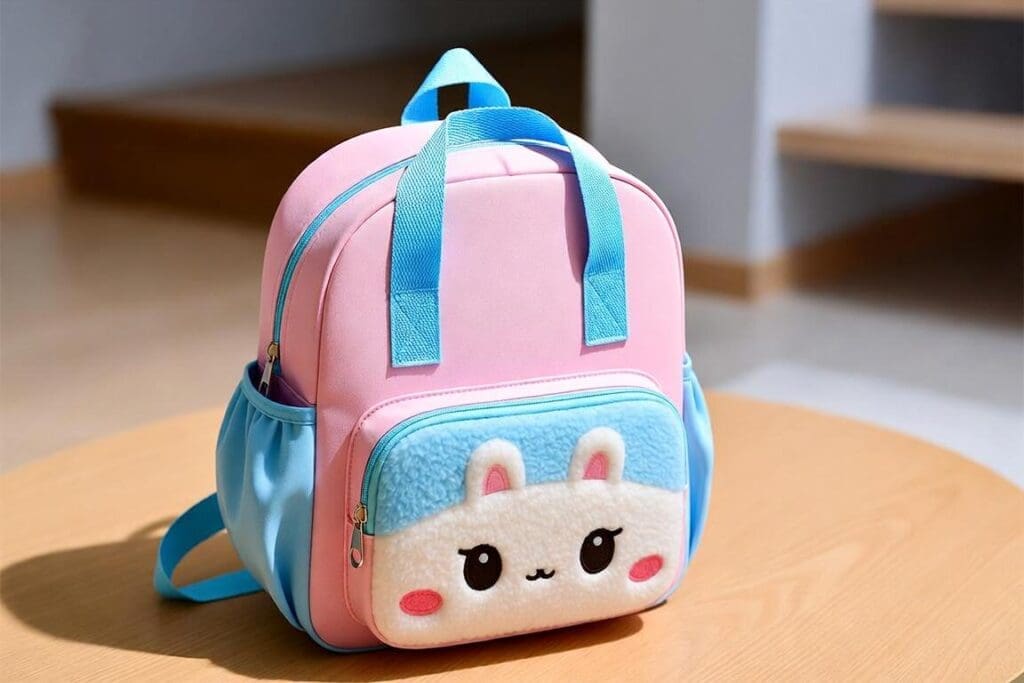
Elementary School: Building the Foundation
Young children need backpacks for school that prioritize comfort and safety above all else. Their bodies are still developing, and the loads they carry are relatively light, so the focus should be on proper support and visibility.
Padded shoulder straps and a padded back panel are essential for distributing weight evenly and reducing shoulder strain. Look for straps at least an inch wide; thin straps dig into shoulders and cause discomfort even with light loads. The back panel should have some cushioning but doesn’t need to be thick—just enough to prevent books from pressing directly against the spine.
Weight matters significantly at this age. An empty backpack for school should weigh under 1.5 pounds, leaving room for books without exceeding the recommended 10–15% of body weight limit. A 70-pound child, for example, should carry no more than 7–10 pounds total. This constraint means every ounce of the pack itself counts.
Multiple compartments serve a practical purpose beyond organization: they prevent items from shifting during movement, which can throw off weight distribution and cause the child to compensate with poor posture. A main compartment, front pocket, and side pockets are sufficient.
Visibility is a safety concern for children commuting to school. Reflective strips or bright colors make a real difference during early morning and afternoon travel, especially in low-light conditions or near traffic.
Durability matters because elementary school backpacks endure rough handling—dropped on floors, stuffed into cubbies, and dragged across playgrounds. Reinforced seams and quality zippers separate packs that last three to four years from those that fail within months.
Middle and High School: Adapting to Increased Demands
As students age, their backpacks for school must accommodate heavier textbooks, technology, and more complex organizational needs. They also begin to care about appearance, which is a legitimate consideration—a backpack for school a student actually wants to use is more likely to be used correctly.
Textbooks and laptops are heavier than elementary school materials, so ergonomic design becomes more important. Look for packs with lumbar support (a slight curve or structure at the lower back) that helps distribute weight toward the hips rather than hanging entirely from the shoulders. Hip belts, if included, should be padded and positioned to sit comfortably on the hip bones.
Laptop compartments with padding are now essential. A dedicated, cushioned space protects expensive devices from damage during transport and keeps them separate from other items. Tablets and chargers benefit from their own organizational pockets, reducing the chance of tangled cords or lost accessories.
Larger capacity backpacks for school (25–30 liters) accommodates heavier loads, but size alone isn’t the goal—a pack that’s too large encourages overpacking and excessive weight. The backpack for school should feel proportionate to the student’s frame and shouldn’t extend significantly below the waist when worn.
Material quality becomes increasingly important as packs endure more frequent use and heavier contents. Ballistic nylon and quality polyester are lightweight, water-resistant, and durable. Canvas offers a classic aesthetic and strong durability but may be heavier and less water-resistant. Mesh panels on the back improve breathability, reducing heat and moisture buildup during long school days or walks across campus.

College: Flexibility and Professionalism
College students need backpacks that serve multiple purposes without requiring a separate bag for each activity. Classes, the gym, weekend trips, internships, and campus jobs all demand different things, but a well-designed college backpack for school can handle most scenarios.
Hybrid designs that work equally well in academic and professional settings are valuable. A backpack that looks appropriate for a business casual internship is more versatile than one that reads purely as leisure wear. This doesn’t mean sacrificing comfort or function—it means choosing neutral colors and clean lines.
Laptop and tablet compartments with security features become more critical when protecting expensive personal electronics. Some packs include anti-theft designs like hidden pockets or lockable zippers. Consider whether these features align with your actual security concerns and commuting environment.
Comfortable straps and back support matter significantly for students who walk across sprawling campuses, use public transit, or carry their pack during part-time work shifts. A poorly designed pack worn for hours daily creates cumulative strain. Padded straps, back panel support, and ideally a hip belt make a measurable difference in comfort.
Weather-resistant materials protect books and devices in various conditions. College students often deal with unpredictable weather and may not have lockers to store packs between classes. A water-resistant exterior and sealed seams preserve the contents during unexpected rain or snow.
Weight and Fit: Non-Negotiable Factors
Regardless of age, certain biomechanical principles apply to all backpacks for school. A pack that doesn’t fit properly will cause problems no matter how well-designed it is.
The 10–15% body weight rule is a practical guideline: a 100-pound middle schooler should carry no more than 10–15 pounds total, including the pack itself. Exceeding this threshold increases risk of back pain and postural problems. Weighing the pack with typical contents before purchase helps ensure it will stay within safe limits.
Straps should sit snugly on the shoulders without digging in or slipping. If straps slip during normal movement, the pack will shift and create uneven weight distribution. If straps dig in, they’re either too narrow, too short, or the pack is too heavy. Adjustable straps are essential because children and teens grow, and a properly fitted pack today may be incorrectly fitted in six months.
The pack should rest in the middle of the back, with the bottom sitting at or slightly above the waist. A pack that sags below the waist pulls weight away from the body’s center of gravity, forcing the wearer to lean forward and strain the lower back. A pack that sits too high may not distribute weight to the hips effectively.
Hip belts, when present, should be padded and positioned to sit on the hip bones rather than the soft tissue of the abdomen. A properly positioned hip belt transfers 20–30% of the pack’s weight to the hips and core, significantly reducing shoulder strain.
Material Quality and Durability
Understanding materials helps identify the backpack for school that will last through years of school use rather than failing within a season.
Ballistic nylon and polyester are the workhorses of backpack manufacturing. Both are lightweight, water-resistant, and extremely durable. They resist tearing and abrasion, making them ideal for daily school use. Polyester is typically less expensive than ballistic nylon but performs similarly for most applications.
Canvas offers durability and an appealing aesthetic, but it’s heavier than synthetic options and less water-resistant. Canvas backpacks work well for students who prioritize appearance and don’t mind the weight trade-off, or for college students who don’t carry packs daily.
Mesh panels on the back improve breathability by allowing air circulation between the pack and the wearer’s back. This reduces heat buildup and moisture accumulation, making the pack more comfortable during warm weather or active commutes.
Quality zippers and stitching are worth the investment because they determine how long a backpack actually lasts. Cheap zippers jam and break easily; quality zippers glide smoothly and endure thousands of open-close cycles. Stitching should be straight and dense, with no loose threads or gaps. Reinforced stress points—where straps attach to the pack, at the bottom corners, and around pockets—should show extra stitching or bar-tacking.
Warranty or return policies indicate manufacturer confidence in product longevity. A company offering a multi-year warranty stands behind its construction quality. Conversely, backpacks with no warranty or only 30-day returns may reflect lower durability expectations.

Backpack for School Budget Considerations
The relationship between price and value in backpacks isn’t linear. The cheapest option isn’t the best value, but the most expensive option isn’t necessary for school use.
Budget a backpack for school under $30 often lack proper ergonomic support, use thin materials that fail quickly, and employ cheap zippers that jam or break within months. Replacing a $20 backpack annually costs more than investing in a better option initially.
Mid-range backpacks for school ($40–$80) typically offer the best balance of features, durability, and cost for school use. These packs include padded straps, adequate organizational compartments, quality zippers, and materials that withstand daily wear for multiple years. Most students and parents find this price range delivers genuine value.
Premium brands ($100 and up) offer advanced features like specialized laptop compartments, weather-sealing, or aesthetic appeal that justifies higher cost for some buyers. However, these features aren’t necessary for basic school needs. A $120 backpack isn’t inherently better at carrying textbooks and supplies than a $60 backpack with solid construction.
Back-to-school sales and promotions can reduce prices on quality brands by 20–40%, making mid-range options even more accessible. Shopping during these periods without sacrificing quality is a practical strategy.
Red Flags to Avoid
Certain backpack for school design choices consistently lead to problems, and recognizing them helps eliminate poor options quickly.
Thin, non-padded straps are an immediate red flag. No amount of other good design compensates for straps that dig into shoulders or provide no cushioning. If you can easily compress the strap material between your fingers, it’s too thin.
Backpacks that are too large encourage overpacking. A 40-liter pack invites filling it beyond what a student should carry. Capacity should match realistic school needs, not theoretical maximum capacity.
Poor ventilation on the back panel traps heat and moisture against the skin, creating discomfort and potentially promoting mold growth if the pack is stored damp. Look for mesh panels or channels that allow airflow.
Weak zippers or seams that fail quickly indicate poor overall construction. Inspect zippers for smooth operation and quality feel. Check seams for straight stitching, adequate density, and reinforcement at stress points.
Lack of organizational compartments forces students to dump everything into one main space, creating uneven weight distribution and making it difficult to find items. Even basic organization—a front pocket and side pockets—makes a meaningful difference.
Testing Before Purchase
Evaluating a backpack for school in person, when possible, prevents costly mistakes.
Have the student wear the backpack with typical school supplies inside—textbooks, notebooks, a laptop if applicable. This realistic test reveals comfort issues that aren’t apparent with an empty pack. The student should be able to walk around the store, bend, and move naturally without discomfort or strain.
Check that straps adjust properly and don’t slip during movement. Fasten the pack, have the student move around, and verify the straps stay in place and the pack doesn’t shift.
Verify that pockets and compartments are accessible and functional. Open and close all zippers multiple times. Check that pockets are positioned where items can actually be retrieved during use, not awkwardly placed.
Inspect zippers, seams, and material quality up close. Run your fingers along seams, check for loose threads, and test zipper smoothness. Feel the material to assess weight and durability.
Online reviews from other parents or students with similar needs provide insight into real-world durability and comfort. Look for reviews from people with similar requirements—a college student’s review of a professional laptop backpack may not reflect how well it works for an elementary school child.
Extending Backpack Life
Proper maintenance protects the investment and extends the useful life of a backpack significantly.
Empty and wipe down the backpack weekly to remove dirt and debris. Dust and crumbs can accumulate in pockets and seams, attracting pests and degrading materials over time. A quick wipe with a dry cloth prevents buildup.
Spot-clean stains promptly to prevent permanent damage. Most stains respond to gentle cleaning with mild soap and water applied to a cloth. Avoid soaking the entire pack or using harsh chemicals that can damage materials or coatings.
Air-dry completely after exposure to moisture; avoid direct heat sources like radiators or direct sunlight, which can degrade materials and adhesives. Wet packs should be left open in a well-ventilated area to dry naturally.
Store in a cool, dry place during off-seasons to prevent mold and material degradation. Damp storage conditions promote mold growth and can damage zippers and stitching.
Replace worn straps or repair small tears early to prevent larger damage. A torn seam or failing zipper, if addressed promptly, can often be repaired or replaced inexpensively. Ignoring these issues allows damage to spread and can make the pack unusable.
