Nov
A leather bag or wallet is one of the few everyday objects that has to work hard and still look like itself after months of use. You reach for it at a register, drop it into a tote, or pack it for a trip, and it has to hold cards, keys, or a day’s essentials without coming apart. That is a practical reason to look closely at leather itself, and at a brand that is built around it. At My Small Store, that brand is Kiko Leather. 👜
This guide explains who Kiko Leather is, what leather is, how the bags and wallets in our collection are put together, and how to choose a style that matches the way you actually carry things. It also includes a short section on ordinary leather care. You will not find prices here, because those change. The product pages themselves are the place to compare current details.
📖 Who Kiko Leather is
According to the About page on Kiko Leather’s own site, the brand was founded by the Kiko brothers in 2014, straight out of Los Angeles. The company describes the brand and product line as a fresh chapter in a story of generations of leather crafters, innovators, and distributors. It also says the Kiko brothers are no strangers to tanneries and leather production facilities, with decades of experience acquiring industry knowledge of materials, methods, and resources for leather goods.
In the brand’s own words, Kiko Leather is a blend of family trade history and modern-day ambition, and it “brings craftsmanship to ensure lifelong products with timeless design.” That is how the company presents itself, not a promise we can independently verify here. The About page also notes that not all wallets are created the same, that there are limits to what leather can do, and that those limits can be mastered with the right resources, time, and skill. “Don’t let the youth of Kiko Leather fool you,” the page says. “Like all good things, tanning leather takes time. For Kiko Leather, the time is now.”
That is the origin story the brand publishes. This post does not add a factory location, a founding myth, or a manufacturing claim beyond what that page states. What we can show you is the range of Kiko Leather bags and wallets now on our site, and the features listed on those product pages. ✨
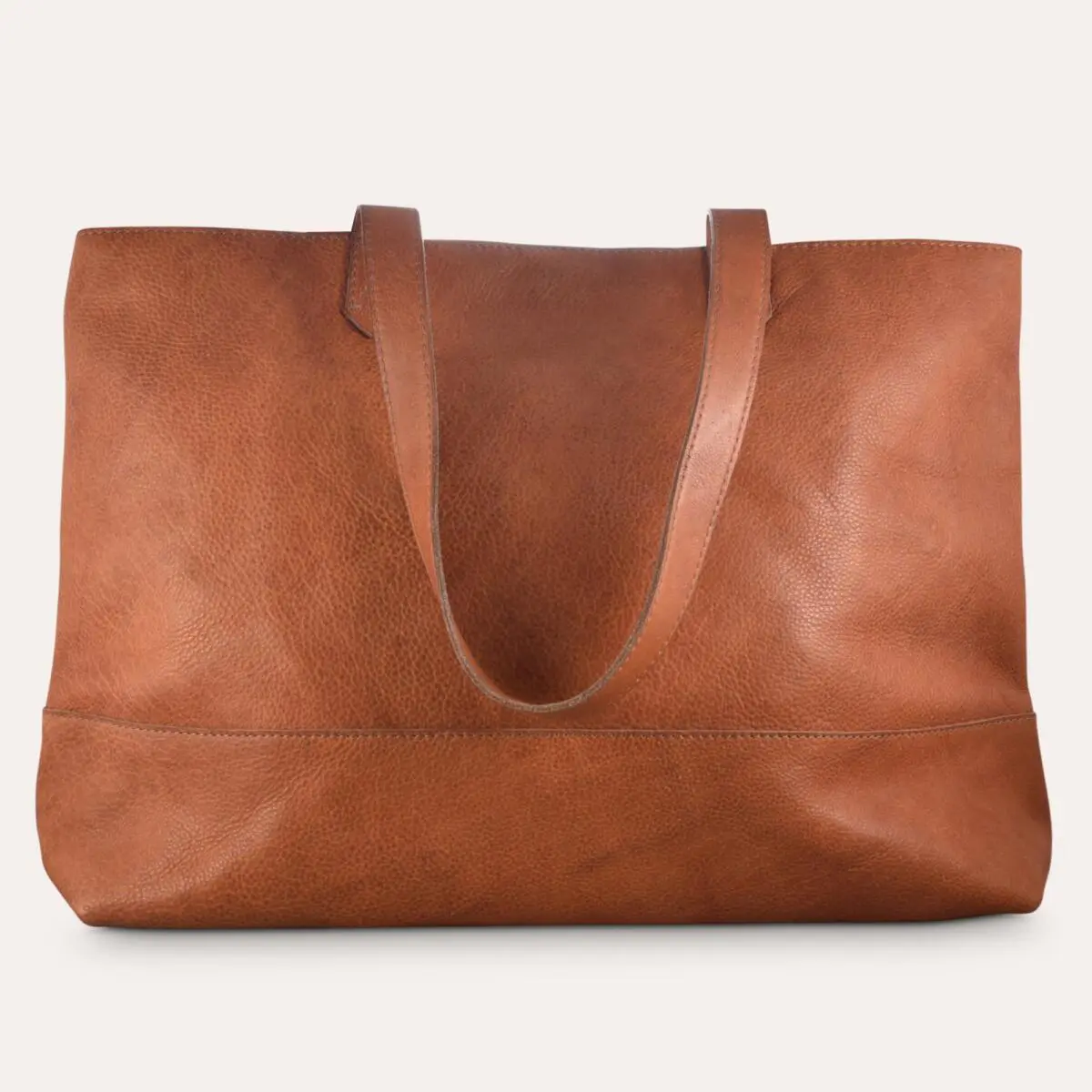
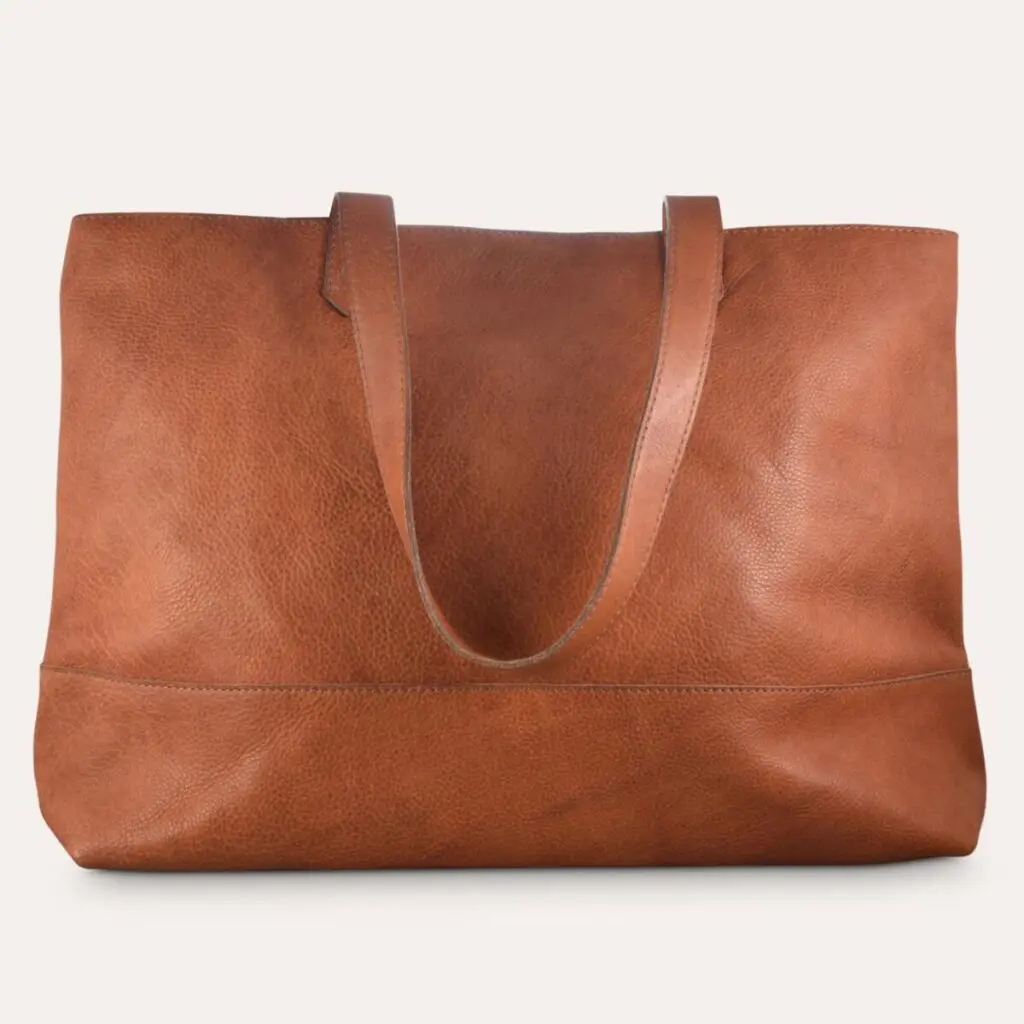
The photo above is the brown Kiko Leather Classic Tote, a genuine-leather tote with a magnetic closure, dual shoulder straps, a reinforced base panel, and an interior zipper pocket and phone sleeve. It is one of the larger everyday bags in the collection. You can see the rest of the line on our Kiko brand page.
🌱 What leather is, and why it is used
Leather, as described by Wikipedia, is a strong, flexible, and durable material made by tanning animal skins and hides so they do not decay. It has been used for a long time to make clothing, footwear, handbags, furniture, and other goods. Tanning is the chemical treatment that turns a raw hide into a stable material. That is the process Kiko Leather’s About page is pointing to when it says tanning takes time.
None of that means every leather item is the same. Hides, tanning methods, and finishes differ, and so do the patterns cut from them. Our Kiko Leather product pages describe several finishes and leather types, and we stay with those descriptions here: genuine leather, genuine pebble leather, top-grain cowhide pebble leather, full-grain cowhide, glove-tanned cowhide, cowhide that is self-lined, and genuine saffiano leather. Where a page names a type, that is the language we use. Where it simply says leather, we do not guess at a grade.
A pebble finish has a textured surface. Saffiano leather, on the items that list it, has a cross-hatch grain. Cowhide is cattle hide, which Wikipedia notes is among the most common sources of leather. A self-lined wallet uses the leather itself on the inside rather than a separate lining. Full-grain leather, when a product page uses that term, is a specific way of describing the hide; we do not add claims about how it will age. The point is simply that the collection is not one identical material used on every bag and every wallet. 👜
🛍️ Kiko Leather bags: totes and crossbodies
If you need a bag that can take a day’s items — a pouch, a wallet, a water bottle, a light layer — a tote is usually the starting point. The Kiko Leather totes on our site differ in how they close, how they are carried, and how the interior is finished.
The Classic Tote is a brown genuine-leather bag with a magnetic closure and an 11-inch strap drop. A reinforced panel finishes the base. Inside, a zipper pocket and a phone sleeve help keep smaller things from sinking to the bottom. It measures 20 inches by 13 inches by 6 inches, so it is one of the roomier shapes.
The On The Go Tote is a softer genuine-leather tote with a top zipper and a lined interior, plus dual shoulder straps and an interior zipper pocket. It comes in black, brown, sand, olive, or blue, in an 11.5 by 18 by 6 inch size. If you prefer a bag that zips closed at the top, this is a more enclosed everyday shape than an open tote.
The Journalist Tote is a roomy top-grain cowhide pebble-leather tote with a wide open front pocket, dual top handles, and a removable shoulder strap. It comes in red, black, brown, dark blue, sand, or olive, and measures 14 by 17 by 7.5 inches. The front pocket is listed as 8.5 by 10 inches, which is wide enough for items you want within reach without opening the main compartment.
The Side Weaved Tote is a more compact black top-grain cowhide pebble-leather bag with woven sides, dual top handles (about a 4.5-inch drop), and a removable, adjustable shoulder strap. The unlined interior has a zipper pocket, in an 8.5 by 9 by 4 inch shape. It is a smaller tote with two ways to carry it.
The Perfect Tote Red is a red genuine-leather tote with contrasting brown shoulder straps, a wide open top, and an unlined sueded interior, in an 18.5 by 11 by 5 inch bowl-shaped form. And the Fold n Hold Tote is a tall cowhide tote with two exterior pockets, a top zipper with a leather tassel, long shoulder straps, a plaid lining, and an interior zipper pocket. It comes in olive, black, sand, or red.
Crossbodies are the other main bag group. They sit closer to the body and usually have a zipper, a flap, or a snap, plus a strap you can wear across the chest or on one shoulder.
The Journey Crossbody is a brown genuine-leather flap bag with a magnetic closure, a front slip pocket under the flap, a zippered main compartment, and a removable shoulder strap, in a 12 by 9 by 4 inch shape. The Fold Over Crossbody is genuine pebble leather with a magnetic flap, a zipper under the flap, and a removable, adjustable strap, in black or dark brown, measuring 10.5 by 8 by 3.5 inches.
If you want something slimmer, the Wallet Crossbody is genuine pebble leather with a front sleeve, a snap, a zipper pocket behind that sleeve, and a removable, adjustable strap. It comes in black or grey, in an 8.5 by 5 by 1.5 inch shape. The Simple Crossbody is a compact genuine pebble-leather bag with zipper pockets on the front and the back and an adjustable leather shoulder strap, in black or aqua, at 7.5 by 4 by 1.5 inches.
Two other compact styles use different finishes. The Two-Tone Crossbody has a suede flap on a genuine-leather body, a turn-lock, a zippered main compartment with a zipper coin pouch inside, and a removable chain shoulder strap with a 21-inch drop. It measures 6 by 4.5 by 1.75 inches. The Two Chain Crossbody is genuine saffiano leather with a top zipper and a leather strap that includes gold-tone chain sections, at 9 by 5.5 by 1.5 inches. The Zip Around Crossbody is also genuine saffiano leather, with a zip-around close, two zipper compartments, card slots, a zipper coin pouch, and an adjustable strap. ✨
💳 Kiko Leather wallets and small goods
Wallets in this collection are mostly bifolds, slim card cases, and a few specialty shapes. The right one depends on how many cards you carry, whether you want a bill compartment, and whether you need an ID window.
The Classic Bifold is a slim cowhide bifold with six card slots, a full-size bill compartment, and stitched edges, in black or brown, at 4.25 by 3.25 inches. The Traditional Bifold Wallet is glove-tanned cowhide with eight card slots, two bill compartments, and a removable slide-in triple ID window, in brown or black, at 4.75 by 3.5 inches. If you regularly need to show an ID, that removable window is the feature to notice.
The Buck Bifold is a self-lined cowhide bifold with card slots, a bill compartment, and contrast stitching, in tan or brown, at 4.5 by 3.5 inches. The Double Bifold Wallet is a self-lined brown cowhide bifold with six card slots and a double bill compartment, at 4.25 by 3.75 inches. The Wave Bifold is a brown unlined leather bifold with a gently curved card-slot edge, light contrast stitching, six card slots, and a bill compartment, at 4.25 by 3.25 inches.
If you carry fewer cards, a slimmer wallet may be enough. The Ram Wallet is a slim black unlined leather bifold with two angled card slots and a bill compartment, at 3.5 by 3.75 inches. The Card Wallet is a slim unlined brown leather wallet with a dark two-button flap, wide-hole contrast stitching, and room for cards and folded cash, at 4 by 3.15 inches.
For cards or notes alone, the Two Fold Card Case is a slim self-lined black leather case with two slots, grey accent stitching, and hand-turned edges. The Classic Card Case is a slim full-grain cowhide sleeve with two card slots and hand-turned edges, in black or brown, at 4.25 by 2.75 inches.
Smaller leather goods sit alongside the bags and wallets. The Travel Case Small is a genuine pebble-leather zip case in a half-moon shape, with a leather zipper pull, in black or red, at 4.5 by 7.5 by 1.5 inches. The Accessory Pouch is a black cowhide drawstring pouch with a sliding stopper and a KIKO stamp, at 7.25 by 9 inches. The Dopp Kit is a black pebble-leather zip-around kit with a side carrying handle, a netted zip pocket on the lid, and a plaid lining, at 10 by 5 by 5 inches. 🧳
🧭 How to choose a bag or wallet
Start with what has to come along, not with a style name. If you carry a pouch, a wallet, and a few larger items, a tote with a zipper or a magnetic close will usually serve you better than a compact crossbody. If you mainly need a phone, a card holder, and keys, a slim crossbody or a wallet crossbody may be enough on its own. Write down the items you actually take with you on a typical day, then match the bag’s listed dimensions and pockets to that list.
Next, decide how you want to carry the bag. Dual shoulder straps with a longer drop, such as the ones on the Classic Tote, sit on the shoulder. Shorter top handles, such as those on the Side Weaved Tote, are meant to be held in the hand, often with a removable strap as a second option. A crossbody strap leaves both hands free. Removable and adjustable straps, which appear on several of the bags above, let you switch between those ways of carrying the same piece.
Then look at the closure. An open tote is quick to use and also more open to the weather and to a crowded space. A magnetic flap, a turn-lock, a snap, or a top zipper adds a step when you reach inside, and it also keeps the opening more secure. Zippered interiors and interior zipper pockets, listed on several totes, are useful if you do not want a smaller item sliding to the base of a large bag. A front pocket, as on the Journalist Tote or the Journey Crossbody, is for things you want without opening the main compartment — a transit pass, a pair of glasses, a phone.
For a wallet, count the cards you actually use, and be honest about cash. Six card slots and one bill compartment, as on the Classic Bifold or the Wave Bifold, suit a moderate everyday stack. Eight card slots, two bill compartments, and a removable ID window, as on the Traditional Bifold Wallet, suit a fuller carry. Two card slots, as on the Ram Wallet or the card cases, suit a pocket that should stay slim. A double bill compartment is worth noticing if you like to keep bills in two groups rather than in one stack.
Material and finish are the last choice, not the first. Pebble leather has a visible texture. Saffiano leather has a cross-hatch grain and appears on a few of the slimmer crossbodies. A suede flap, as on the Two-Tone Crossbody, is a different surface from the leather body it sits on and will need the same gentle care described below. Color is listed on each product page — some styles come in one color, others in several — and is worth checking if you want a bag and a wallet to sit together in the same everyday kit. ✨
🧼 A short guide to leather care
Kiko Leather’s public site does not publish a detailed care manual, so this section is general advice for leather goods, not a set of brand-specific instructions. Wikipedia describes leather as a durable material, but a bag or wallet still lasts longer when it is kept dry, cleaned gently, and not asked to hold more than it was cut to hold.
Keep leather out of the washing machine and the dryer, and do not soak it. If the surface picks up dust or a light mark, empty the bag or wallet first, then wipe the outside with a soft, slightly damp cloth and let it air-dry away from a heater or direct sun. Do not use household cleaners, polish, or oil unless the product page calls for a specific product — these pages do not. A little moisture from rain should be blotted, not rubbed, and the item should dry in the open, stuffed loosely with paper if it needs to hold its shape.
Avoid overstuffing. A bifold that is forced around too many cards will strain the fold and the stitching. A zip-around pouch or a dopp kit will wear its zipper sooner if the zipper is pulled around a bulge. Keep sharp keys and unguarded metal edges away from suede, from a pebble surface you want to keep even, and from any light lining. When a bag is not in use, store it in a dry place, preferably standing or loosely stuffed, not crushed under heavier objects. 🌿
If a strap is removable, unclip it before you wipe the bag so you can reach the rings and the leather around them. If a strap is adjustable, do not force a hole or a slider past the point where the leather already shows wear. These are ordinary habits, and they apply as much to a small card case as to a 20-inch tote.
🛍️ Where to look next
You can browse the full Kiko Leather range, including bags and wallets not listed above, on our Kiko brand page. Wallets and card cases also appear in our Wallets category. If you already know you want a tote, a crossbody, or a bifold, start with the product pages linked in the sections above and compare the closures, dimensions, and leather types they list.
A Kiko Leather bag or wallet is a straightforward object: leather, a closure, and a way to carry what you need. The brand’s own About page presents that as the result of time spent with tanning, materials, and design. Our part is to put the live collection in one place, describe it as the product pages describe it, and help you match a style to the way you move through the day. 👜
🎖️ 100% of our profits go to a veterans’ NGO for coats and hygiene.
